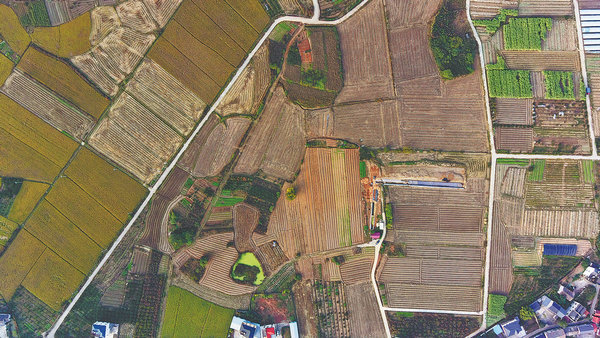
Huangchaodun Site in Quzhou
Introduction
The Huangchaodun Site in Quzhou, located in Zhejiang province, China, is a significant archaeological site that has captured the interest of researchers and historians due to its potential as one of the earliest known centers of rice agriculture. Dating back approximately 9,300 to 8,000 years, this site offers a unique glimpse into early Neolithic life and the domestication of rice, a staple that has fundamentally shaped human societies. The site's discovery of rice phytoliths, carbonized rice, and other artifacts suggests a developed and organized agricultural system, making it an invaluable source for understanding prehistoric farming practices in East Asia.
Historical Background
The Huangchaodun Site is believed to belong to the middle and late period of the Shangshan Culture, which existed from approximately 11,000 to 8,500 years ago. This Neolithic culture is recognized as one of the earliest in China to develop rice agriculture. The site's timeframe also overlaps with the Kuahuqiao Culture, which dates from 8,000 to 7,000 years ago and is known for its advanced pottery and agricultural practices. These cultures thrived in the Jinqu Basin in Zhejiang, a region conducive to early agricultural development due to its favorable environmental conditions.
The emergence of rice agriculture in this region paralleled similar developments in West Asia, where people were domesticating wheat and barley around the same period. The domestication of rice at Huangchaodun signifies a major advancement in agricultural technology, contributing to the formation of settled communities and complex societies.
Archaeological Discoveries
The archaeological investigations at the Huangchaodun Site have uncovered several significant findings. The most notable discovery is an area to the east of the settlements, covering approximately 15,000 square meters, which is considered the earliest known rice field. This field displayed a dense distribution of rice phytoliths, or mineralized plant remains, indicating that rice was heavily cultivated in this area. The presence of carbonized rice and rice husks further supports the hypothesis of domesticated rice cultivation.
The site also features a complex settlement layout, including two platforms surrounded by a moat, resembling the shape of a pear. The smaller platform is located in the north, and the larger one in the south, with the rice field situated to the east. Additionally, an ancient waterway and pond have been discovered to the west of the site, possibly linked by an artificial drainage ditch to the moat.
Other artifacts unearthed include pottery vessels from both the Shangshan and Kuahuqiao periods, such as jars, plates, and bowls. These findings provide insight into the daily life and material culture of the prehistoric inhabitants.
Cultural Significance
The Huangchaodun Site holds immense cultural significance as it provides a window into the early development of rice agriculture and its impact on human civilization. The site's discoveries suggest that the framework of a rice agricultural society had begun to take shape, potentially even surpassing the formation stage. This development played a crucial role in the transition from nomadic to settled lifestyles, fostering the growth of stable communities and enabling population expansion.
The presence of two platforms separated by a moat also hints at the complexity of social structures during this period. These platforms may represent two distinct groups living in close proximity, indicating a level of societal organization and cooperation. Such findings contribute to our understanding of the social and cultural dynamics of early Neolithic communities.
Preservation and Conservation
Preservation and conservation efforts at the Huangchaodun Site are of paramount importance due to the site's historical and archaeological value. The fact that this rice field and its associated features have been preserved for thousands of years is remarkable. Scholars believe that specific environmental conditions may have contributed to the site's preservation, allowing it to withstand the test of time.
Ongoing conservation work aims to protect the site's integrity while facilitating further archaeological research. This involves careful excavation techniques, systematic documentation, and the implementation of protective measures to prevent damage from environmental and human factors.
Research and Studies
Research and studies at the Huangchaodun Site focus on various aspects of early rice agriculture and Neolithic society. Archaeologists employ a systematic approach to uncover and analyze rice fields, utilizing preliminary field surveys, systematic exploration, archaeo-botanical analysis, and focused excavation. These methods have provided substantial insights into the site's historical context and its contribution to the understanding of early agricultural practices.
The site's comparison with other Neolithic sites, such as the Baiyinchanghan Site in Inner Mongolia, also enriches the academic discourse on the development of early agricultural societies. Scholars continue to investigate the reasons behind the site's exceptional preservation and the potential existence of an elaborate social structure based on the settlement layout.
Tourism and Education
The Huangchaodun Site serves as an educational resource and a potential tourist attraction, offering visitors a chance to learn about early human civilization and the origins of rice agriculture. Educational programs aim to disseminate knowledge about the site's archaeological significance and its role in shaping human history. Tourism development plans focus on creating an engaging and informative experience for visitors, highlighting the site's historical importance while ensuring its preservation for future generations.








